
Después de un accidente grave, usted y su familia necesitan justicia, rendición de cuentas, y el pleno apoyo financiero que le corresponde en virtud de la ley de Texas. Una demanda por lesiones personales proporciona a las víctimas una vía para responsabilizar a la parte culpable de los daños que han causado. Para responsabilizar a otra parte de su accidente, tendrá que estar preparado para presentar pruebas convincentes. Para ello, necesitará una carta de expoliación.
Uno de los muchos retos de la ley de lesiones personales es que las pruebas pertinentes a veces están en manos del demandado. Una carta de expoliación es una herramienta legal importante que se puede utilizar para ayudar a asegurar que un acusado conserva las pruebas que pueda necesitar. Aquí, nuestro abogado de lesiones personales del Condado de Brazoria explica las cosas más importantes que las víctimas deben entender acerca de las cartas de expoliación.
What Is A Spoliation Letter?
Simply described, a letter of spoliation is a type of legal notice that officially informs a potential defendant or other implicated third party that they may have evidence/information with relevance to your personal injury case.
A well-drafted spoliation letter clearly notifies the recipient of the potential evidence and emphasizes their duty to preserve that evidence. It can be a very important tool to help ensure that relevant evidence is not lost or destroyed—either intentionally or unintentionally.
When Is a Spoliation Letter Required?
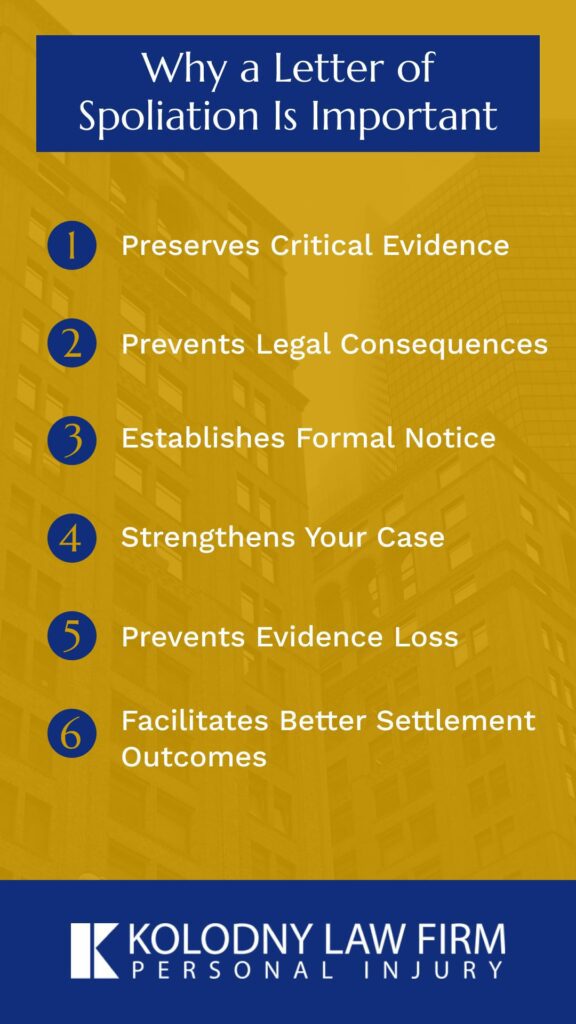
1. When Evidence Is At Risk of Being Destroyed or Altered
If there is a reasonable belief that key evidence, such as documents, physical items, or electronic data, might be destroyed or altered before the case is resolved, a spoliation letter is necessary. This can apply to items like accident scene photographs, maintenance records, emails, or surveillance footage.
2. When the Evidence Is Critical to Your Case
If certain evidence is integral to proving your claims or defending against the opposing party’s claims, it is important to send a spoliation letter. For instance, in a personal injury case, a vehicle’s black box data, security camera footage of an incident, or medical records may be key evidence.
3. When You Are Aware of Potential Destruction of Evidence
If you have reason to believe that the other party is aware of the importance of certain evidence but is failing to preserve it, issuing a spoliation letter becomes necessary. For example, if the party who possesses important records or physical evidence is about to dispose of or overwrite digital data, a letter can help enforce the duty to preserve it.
4. When Legal Proceedings Are Imminent
A spoliation letter is often sent before litigation officially begins, as it serves to alert the other party of their duty to preserve evidence related to a potential lawsuit. This letter acts as a reminder and formal request to prevent any actions that might compromise the integrity of the case.
5. When You Need to Prevent “Inadvertent” Destruction of Evidence
Sometimes, parties involved in a dispute may not be aware of their duty to preserve evidence. A spoliation letter serves as a clear reminder, urging the responsible party to take steps to safeguard important information, thereby preventing inadvertent destruction of evidence.
6. When There Is a Risk of Evidence Being Lost in the Normal Course of Business
In some instances, evidence could be lost or discarded during the regular operations of a business, such as during routine document disposal or system upgrades. A spoliation letter can serve to place the party on notice that the evidence in question is crucial to a potential legal claim and should be preserved.
Ley de Texas: Inferencia adversa por falta de conservación de pruebas
Under Texas law, parties to a potential legal dispute have a general duty to make a good faith effort to preserve relevant evidence that they have in their possession. What a party violates that duty, it could have an effect on the case.
As articulated in 1993 Texas appeals court case of Brewer v. Dowling, the spoliation of evidence can be rectified with an adverse inference. In other words, if a party knowingly, intentionally, or negligently fails to keep relevant evidence, the court will assume that the evidence in question was going to be unfavorable to them.
Al enviar una carta exhaustiva de expoliación en un caso de lesiones personales, puede situarse en la mejor posición jurídica posible. Hacerlo ayudará a garantizar que el posible demandado sea claramente consciente de las pruebas que podría tener y de su deber de conservarlas. Si lo cumplen y las conservan, usted podrá tener acceso a esas pruebas. Si pierden o destruyen las pruebas, entonces usted puede tener derecho a una inferencia adversa a su favor.
Call (713) 532-4474 or complete the Free Case Evaluation form below
Schedule a Free Consultation with a Personal Injury Attorney in Brazoria County, Texas
At the Kolodny Law Firm, our Brazoria County personal injury attorney is an aggressive, reliable advocate for injured victims and the people they care about most. If you have any questions about spoliation letters or the personal injury claims process in general, we can help.
‘Contact us now for a no cost, no commitment case review. Our personal injury lawyer represents victims throughout Brazoria County, including in Pearland, Lake Jackson, Alvin, Angleton, Clute, and Manvel.

Alan Kolodny está comprometido a representar a clientes lesionados en Texas y en todo Estados Unidos. Alan obtuvo su licenciatura en la Universidad Rice y su doctorado en Derecho en la Universidad Metodista del Sur.
Centra su práctica en la representación de demandantes en casos de lesiones personales relacionados con los siguientes asuntos: accidentes marítimos y de alta mar, incluidos los contemplados en la Ley Jones; accidentes automovilísticos y de camiones de 18 ruedas; y accidentes laborales, accidentes relacionados con el trabajo y reclamaciones de trabajadores ferroviarios lesionados en virtud de la Ley Federal de Responsabilidad de los Empleadores.