

La Ley Jones es una ley federal que proporciona recursos legales a los marineros que se lesionaron durante el curso de su empleo. En virtud de esta ley, los empleadores marítimos tienen la responsabilidad legal de proporcionar a los marineros un lugar de trabajo seguro. Si una empresa u organización no lo hace, puede ser considerada responsable de cualquier lesión causada por su negligencia.
La doctrina jurídica de la falta de navegabilidad es una causa de acción independiente de una reclamación en virtud de la Ley Jones. Un empleador marítimo puede ser considerado estrictamente responsable de las lesiones o muertes causadas por un buque no navegable. Aquí, nuestros abogados marítimos sudeste de Texas discutir las cosas clave a saber acerca de la doctrina de la falta de navegabilidad.
Buque en condiciones de navegar: Una obligación absoluta según la legislación federal
La normativa marítima federal impone a los propietarios y operadores de buques un deber absoluto de navegabilidad. Es decir, deben proporcionar una embarcación en condiciones de navegar a los tripulantes y demás pasajeros. No hacerlo constituye una violación de la normativa marítima federal y se impone una responsabilidad objetiva.
Los armadores y operadores de buques son estrictamente responsables de la falta de navegabilidad
Jones Act claims are negligence claims. A seaman injured in the course and scope of their work can hold an employer liable for any injuries caused by negligence. The Jones Act defines negligence as the failure to take proper care.
In contrast, unseaworthiness claims are strict liability claims. In this sense, an unseaworthiness lawsuit is similar to a product liability lawsuit. A vessel owner or operator is liable for any harm caused by an unseaworthy vessel—even if there is no evidence of negligence.
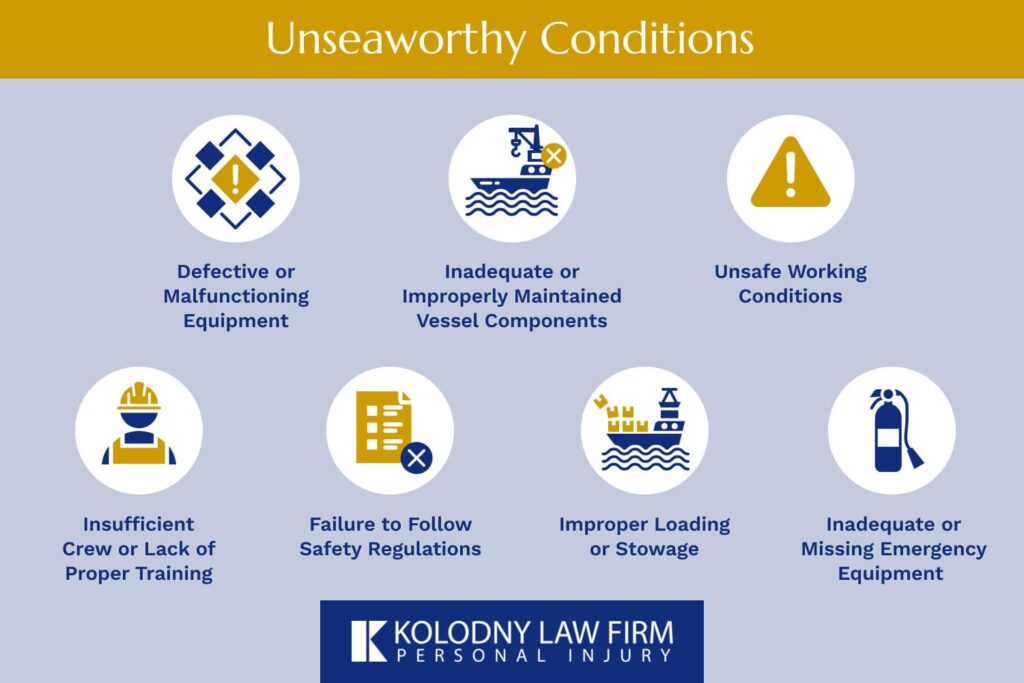
¿Cómo se define la falta de navegabilidad?
While federal maritime law is clear that vessel owners and operators have a duty to provide a seaworthy vessel, the term is not always easy to define.
It is important to emphasize that ‘unseaworthiness’ does not mean that a vessel is wholly incapable of sailing. Quite the contrary, the meaning is expansive. It simply means that conditions on the ship itself are not appropriately safe for crewmembers/passengers. Some examples of unseaworthiness include:
- Personal o formación inadecuados;
- Condiciones peligrosas o defectuosas en el buque;
- Problemas mecánicos no inspeccionados o no reparados;
- Violación de las normas federales de seguridad;
- Condiciones resbaladizas o inseguras en las cubiertas o escaleras; y
- Falta de equipos adecuados para salvar vidas.
En última instancia, cada accidente marítimo requiere una investigación exhaustiva. Un abogado puede ayudarle a reunir y montar las pruebas para demostrar la falta de navegabilidad o una violación de la Ley Jones. Con un caso bien fundamentado, un marinero lesionado estará en la mejor posición para recuperar una compensación económica completa y justa por sus lesiones.
Call (713) 532-4474 or complete the Free Case Evaluation form below
How to Prove Unseaworthiness
Proving unseaworthiness in a maritime injury case requires establishing that the vessel or its conditions were unsafe, leading to your injury.
Unlike negligence claims, where the burden is on showing a failure to act reasonably, unseaworthiness claims are based on strict liability. This means you do not need to prove negligence, but you do need to demonstrate that the vessel was unfit for its intended purpose. Here are the steps and evidence needed to prove unseaworthiness:
1. Establish the Vessel Was Unfit for Its Intended Use
The first step is to show that the vessel was not seaworthy—i.e., it was not safe for its intended operation. This can be done by presenting evidence of:
- Defective equipment or machinery: Unrepaired mechanical issues, malfunctioning systems, or unsafe equipment.
- Unsafe working conditions: Slippery decks, inadequate lighting, or unsafe stairways.
- Inadequate staffing or training: Insufficient crew or lack of training for tasks that increase the risk of injury.
2. Show That the Unseaworthiness Caused the Injury
Next, it’s necessary to prove that the unsafe condition directly caused the injury. This could involve:
- Witness testimonies: Statements from fellow crew members or passengers who witnessed the unsafe condition or accident.
- Expert testimony: Opinions from maritime industry experts who can confirm that the vessel was unseaworthy based on their knowledge of maritime safety standards.
- Accident reports and photographs: Documentation that shows the specific unsafe conditions on board, such as pictures of defective equipment or poorly maintained areas.
3. Collect Documentation of the Vessel’s Maintenance and Safety Records
An important part of proving unseaworthiness is showing that the vessel owner or operator had failed to meet safety standards. Key records to gather include:
- Maintenance logs: These can show if the vessel was properly maintained or if there were ongoing issues that went unaddressed.
- Safety inspection reports: Any records that indicate the vessel failed to meet safety standards or regulations.
- Regulatory violations: Evidence that the vessel violated federal or state maritime regulations, which could directly link to unseaworthiness.
4. Highlight Any Prior Issues or Complaints
If there were previous incidents or complaints about the vessel’s condition, these could strengthen your claim. Look for:
- Previous injury reports: If the vessel had a history of accidents or safety violations.
- Crew complaints: Records or testimonies of complaints made by the crew about unsafe working conditions or defective equipment.
5. Work with an Experienced Maritime Attorney
Given the complexity of proving unseaworthiness, it is essential to consult a maritime attorney who can help you gather the right evidence, work with experts, and build a compelling case. A skilled attorney can help you navigate the legal processes and fight for the compensation you deserve.
Damages You Could Claim Under the Doctrine of Unseaworthiness
If you have been injured due to an unseaworthy vessel, you may be entitled to recover a wide range of damages under federal maritime law.
Unlike standard negligence claims, the doctrine of unseaworthiness imposes strict liability on vessel owners and operators, meaning you do not need to prove negligence—only that the vessel or its conditions were unsafe and caused your injury. Below are the key types of damages you can pursue:
1. Medical Expenses
You can claim compensation for all medical costs associated with your injury. This includes:
- Emergency room visits and hospitalization
- Surgeries and medical treatments
- Prescription medications
- Physical therapy and rehabilitation
- Future medical expenses for ongoing care
2. Lost Wages
If your injuries prevent you from working, you may recover compensation for lost wages. This includes both:
- Current Lost Wages: Income you missed due to time off work during recovery.
- Loss of Future Earning Capacity: If your injury causes permanent disability or limitations, you can seek damages for the income you will lose over your lifetime.
3. Pain and Suffering
Maritime workers injured due to unseaworthiness can claim damages for their physical pain, emotional distress, and mental anguish caused by the accident. Compensation may cover:
- Chronic pain and discomfort
- Anxiety, depression, or PTSD
- Loss of enjoyment of life due to the injury
4. Disability and Disfigurement
If your injury results in a permanent disability or visible scarring/disfigurement, you may be entitled to additional compensation. These damages aim to address the long-term impact on your quality of life and ability to perform daily tasks.
5. Loss of Consortium
In cases of severe injuries, spouses or family members may be eligible to recover damages for loss of companionship, support, and care due to the injured seaman’s condition.
Contact a Maritime Lawyer in Houston for a 100% Free Consultation
At the Kolodny Law Firm, our Texas Jones Act attorneys have the skills, expertise, and experience on which you and your family can rely. If you have any questions about unseaworthiness under the Jones Act, we are here to get you reliable answers.
Contact our law firm today for a free, completely confidential case evaluation. With a legal office in Houston, we handle maritime injury claims throughout the Gulf region.
Where You Can Find Our Houston Office
[Relacionado] ¿Qué es la cláusula de salvaguardia para los demandantes?

Alan Kolodny está comprometido a representar a clientes lesionados en Texas y en todo Estados Unidos. Alan obtuvo su licenciatura en la Universidad Rice y su doctorado en Derecho en la Universidad Metodista del Sur.
Centra su práctica en la representación de demandantes en casos de lesiones personales relacionados con los siguientes asuntos: accidentes marítimos y de alta mar, incluidos los contemplados en la Ley Jones; accidentes automovilísticos y de camiones de 18 ruedas; y accidentes laborales, accidentes relacionados con el trabajo y reclamaciones de trabajadores ferroviarios lesionados en virtud de la Ley Federal de Responsabilidad de los Empleadores.